
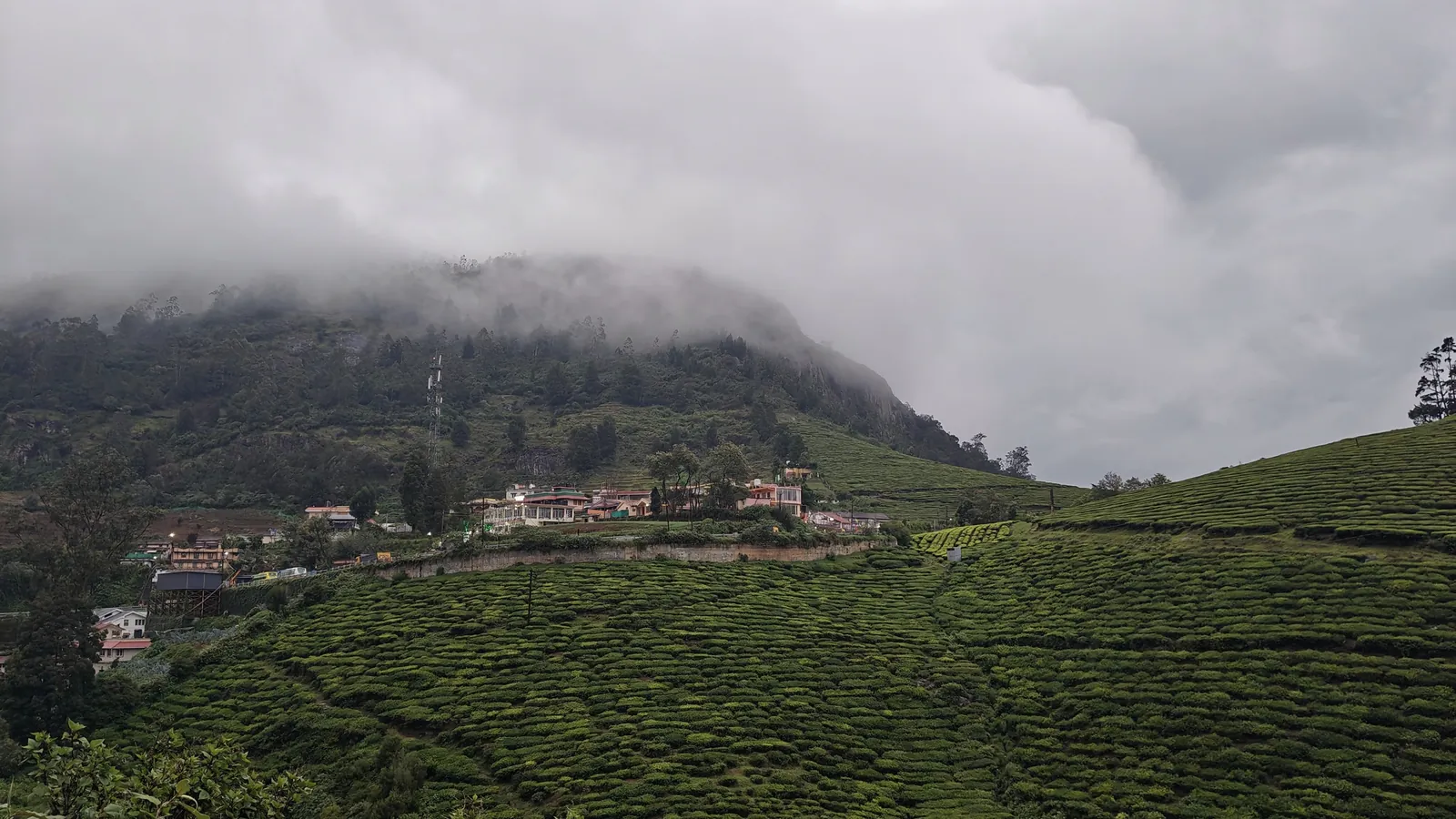
This log is a summary of our retrospective on LessWrong: Reflections from Ooty retreat 2.0. Read the post for the full table of sessions and the notes from the debates.
Question explored
Can a week together help a small group take AI risk seriously and stay grounded? We had three aims:
- Start a community that can resist gradual disempowerment, and build bonds between its members.
- Understand AI capabilities and threat models by building with current tools.
- Cultivate embodiment, and practise integrity in what we believe about AI and progress.
Format
We had 25 applications and selected 15 people after video calls. Each organiser held the calls alone, to reduce bias. The retreat ran for seven days in Ooty, from 23 to 29 June 2025. Each person paid about 35 USD and got three meals a day.
The days mixed three kinds of session:
- Body and attention. Morning meditation, yoga with a teacher, a nature walk each afternoon, a hike on Cairn Hill, circling and a campfire.
- Building. Vibe coding workshops over several days, a writing workshop, and a hands-on session on MCP servers.
- Thinking. Talks on AI safety, machine learning, Buddhism for AI and the metacrisis. Structured debates on timelines and threat models. A workshop on Bayesian updating, prediction markets and a tabletop exercise.
The evenings had a movie, board games and poker.
What worked
- The vibe coding produced working apps. The first was a timer for group conversations, built because people talked past their turn and did not notice.
- Two more apps came out of the week: a tabletop game about misinformation during an election, and Live Conversational Threads, which draws the tangents of a live conversation as a graph.
- In the Bayesian workshop, people updated their probabilities on new evidence and converged through discussion. We scored the result with Brier scores. This format taught more than an abstract talk.
- The prediction markets made us write precise claims about what AI cannot do yet. The group saw the IMO gold medal coming.
- The campfire and the outdoor circling were the best settings for honest conversation. People did not perform or repeat cached arguments.
- Several projects continued after the week. They include a plan for education when intelligence is cheap, weekend meetups in Bangalore, and a shared document of AGI scenarios and cruxes.
Ideas that stayed with us
- The group found gradual disempowerment the most convincing threat model. The risk comes from moderate intelligence everywhere, more than from one superintelligence.
- A prediction can turn into a self-fulfilling prophecy. If we believe that action is futile, we make it so.
- In the timelines debate, one side expected recursive self-improvement soon. The other side saw the gains from larger training runs level off. The useful picture was a stack of S-curves: will new paradigms keep arriving?
- Raw intelligence may be the wrong measure of risk. A better measure is the power we hand over, and narrow recommendation algorithms already hold a lot of it.
What went wrong
- Space. We had no quiet rooms for one-to-one talks, and the seating blocked the paths. The mess cost people their focus.
- Time. Sessions ran over and the breaks disappeared. Our buffer time for flexibility only let events run long.
- Mixed experience. Some people heard the basics again while others lost the thread. Next time we need prerequisites or parallel tracks.
- Pacing. Too many discussions came back to back. The nature breaks divided the group: some found them essential, and some felt they broke the momentum.
- Organisers. We tried to take part and run the logistics at once, so some planned sessions never ran.
- Newcomers. Some people felt thrown into the deep end. They wanted a gentler start and more ways to act, with less time on how things can go wrong.
Most of these problems have one cause. We underestimated operations, and we assumed that flexibility could replace planning when a retreat needs both.
Next experiment
We planned smaller events in Bangalore to test formats, and a better retreat the year after. That retreat is EE Alignment Retreat 3.0.
Comments
This page supports public annotation through Hypothesis. Turn it on, select any text, and choose Annotate. Sign in if prompted.